Home › Guides › Electric Scooters for Heavy Adults: What Actually Holds Up
Electric Scooters for Heavy Adults: What Actually Holds Up
The load rating printed on a spec sheet is the ceiling, not the target. Ride a 260-lb-rated scooter at 258 pounds with a backpack and a lock, and everything - range, braking, steering precision, how long the folding latch stays tight - runs at the edge of its design envelope. The working rule for riders over 220 pounds: your body weight plus what you carry should sit 15-20% under the rated maximum.
What actually bends first
Overloaded scooters do not collapse dramatically - they get vague, then they wear in annoying places. The order we hear about from riders: the folding stem latch develops play and clunks over bumps, deck edges creak where they meet the frame, fender brackets crack on the first real pothole, and the kickstand slowly angles outward. None of it is dangerous on day one; all of it is dangerous at speed on day ninety. Extra weight also multiplies brake force demand - a heavier rider needs measurably more distance to stop from the same speed, which is why brake size makes the checklist below.
The five-point checklist for 250-plus-pound riders
- Rated load with margin: rating at least your weight plus 15-20%. The rating lives on the official spec sheet - every model page on this site links to it. Ratings are not a price-tier thing: the $270 Megawheels R1 lists 265 lbs, and some $1,000 scooters list less. Read the number every time.
- Motor 1000W and up: wattage is what holds 18 mph with a grown adult aboard, on a bridge, into wind. A 500W motor that feels quick solo turns sluggish at 250 pounds - and hill climbs are where it stops being an inconvenience and becomes a safety issue. The hills guide covers the grades math.
- Brakes sized for mass: verify the brake type on the official sheet - discs, front and rear, are the floor for heavier riders, and bigger rotors shed heat on long descents.
- 10-inch-or-larger pneumatic tires: they carry load, absorb what solid small wheels transmit straight into the stem, and the tire guide explains the pressure routine that keeps them honest under weight.
- A stiff deck: no visible flex when you rock it side to side. Flex under load is where range and handling leak away.
Where the catalog lands for heavier riders
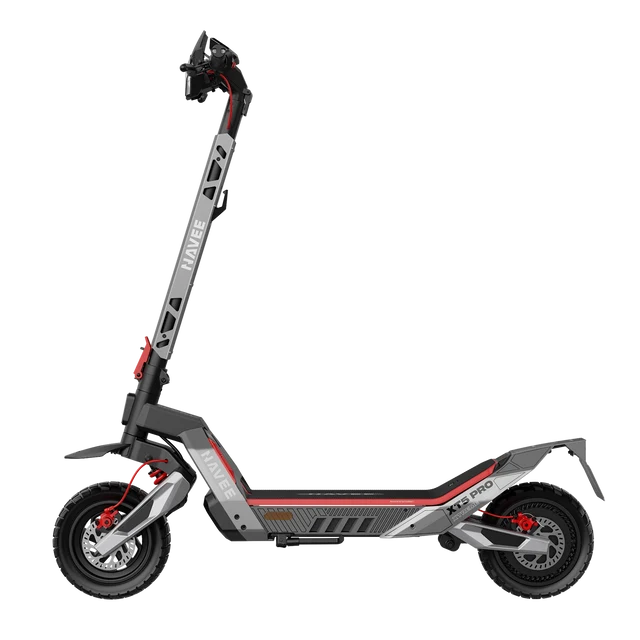
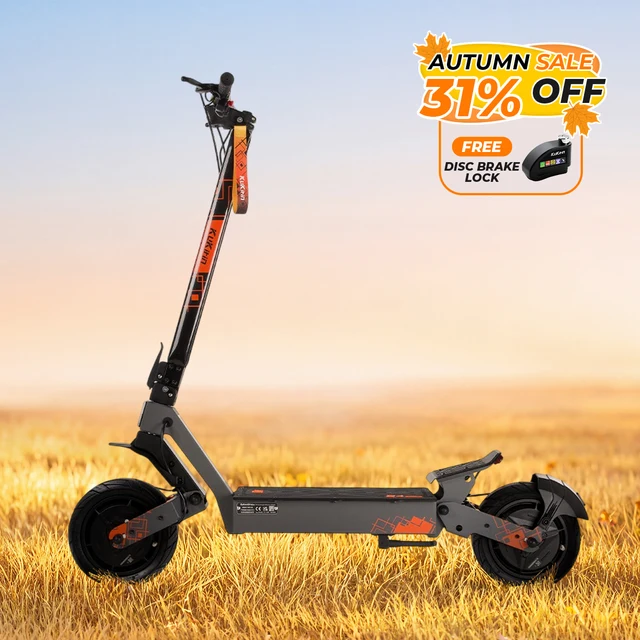
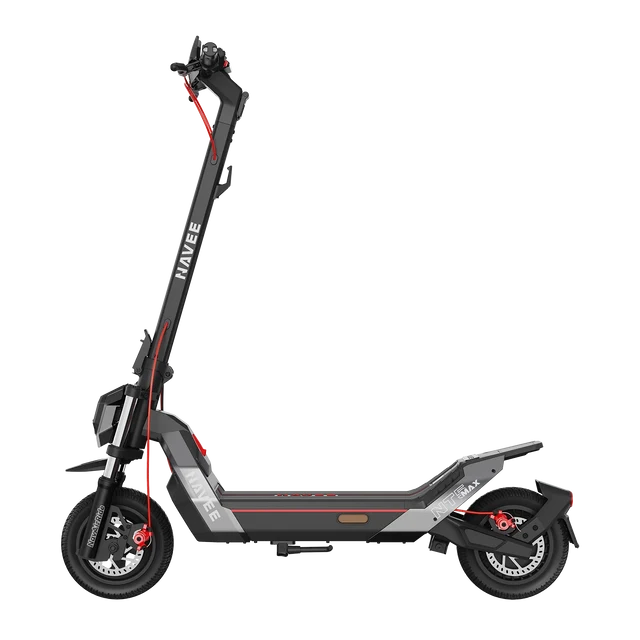
The value pocket is the $700-1,000 band, where 1200W-and-up motors and 10-11 inch wheels arrive before the price does: the NAVEE NT5 Max (1600W, 53 claimed miles) and the KuKirin G4 Ultra (1200W, 60V, 11-inch tires) are the pattern. Step up to the NAVEE XT5 Pro (2200W) when the commute includes serious grades. Range shrinks with load - expect the claimed figure haircut to run toward the high end of the normal 25-40% - so heavier riders should buy range one tier above what the commute math suggests, not exactly at it.
High-power picks that carry weight without drama
One last honesty note: no scooter list page can tell you the ride will feel right at your weight - spec sheets do not carry that. What they can do is eliminate the machines that were never rated for you, and every number above is on the official sheet each model page links to. Check those three figures - load, motor, brakes - before checkout, and the scooter you buy will be one that was designed for you, not one merely willing to tolerate you.
FAQ
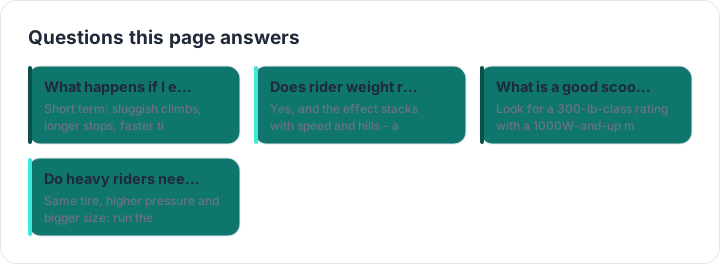
What happens if I exceed the weight limit on a scooter?
Short term: sluggish climbs, longer stops, faster tire wear. Over months: play in the folding latch, cracked fender brackets, creaking deck - and riding past the rated load can void the warranty. Buy margin, not ceiling.
Does rider weight reduce range?
Yes, and the effect stacks with speed and hills - a 250-lb rider typically lands at the high end of the normal 25-40% gap between claimed and real range. Heavy riders should buy claimed range one tier above their commute math.
What is a good scooter for a 250-lb adult?
Look for a 300-lb-class rating with a 1000W-and-up motor and disc brakes front and rear. Verify the load figure on the official spec sheet - it is printed per model, and it is the single number that disqualifies a purchase.
Do heavy riders need different tires?
Same tire, higher pressure and bigger size: run the sidewall pressure figure (never under it), and prefer 10-inch or larger pneumatics, which carry load and resist pinch flats far better than 8-inch wheels.