Home › Guides › Solid vs Pneumatic Tires: Which One Suits Your Streets
Solid vs Pneumatic Tires: Which One Suits Your Streets
The one-line answer: rough or mixed streets want pneumatic tires, and riders who never want to think about tires want solid. Everything else - comfort, grip, punctures, maintenance - follows from that trade. Here is the honest version of each side.
What pneumatic (air-filled) tires buy you
Air is the cheapest suspension ever fitted to a scooter. A pneumatic tire deforms over potholes, expansion joints, and curb cuts, which does two things solid tires cannot: it keeps the ride comfortable, and it keeps the rubber in contact with the road - contact equals grip, and grip equals shorter braking, especially in the wet. Pneumatic tires are also repairable: a puncture is a $10 patch or a $30 inner tube, not a wheel.
The cost is attention. Air leaks, so pressure drops a little every month - an underinflated tire pinches on potholes and flats far more easily than a full one. The whole maintenance routine is one number: check pressure monthly with a $5 gauge against the figure printed on the tire sidewall (most street scooter tires sit between 40 and 50 PSI). Carry a patch kit or a spare tube if your commute cannot survive a walk-home day.
What solid (honeycomb) tires buy you
Solid tires never go flat. That is not a small promise - for renters without a workshop, for shared-fleet abuse, and for anyone who has missed a morning to a flat, a zero-maintenance tire is worth real money. Budget commuters increasingly ship with solid honeycomb tires for exactly this reason.
The trade is physics: there is no air cushion, so every joint in the sidewalk arrives at your wrists, grip is measurably lower - the rain riding guide treats solid tires as a reason to slow down further - and worn solid tires are pressed onto the rim, which turns a replacement into a shop job. Solid suits smooth-asphalt cities and short distances; it punishes rough ones.
Size matters as much as type
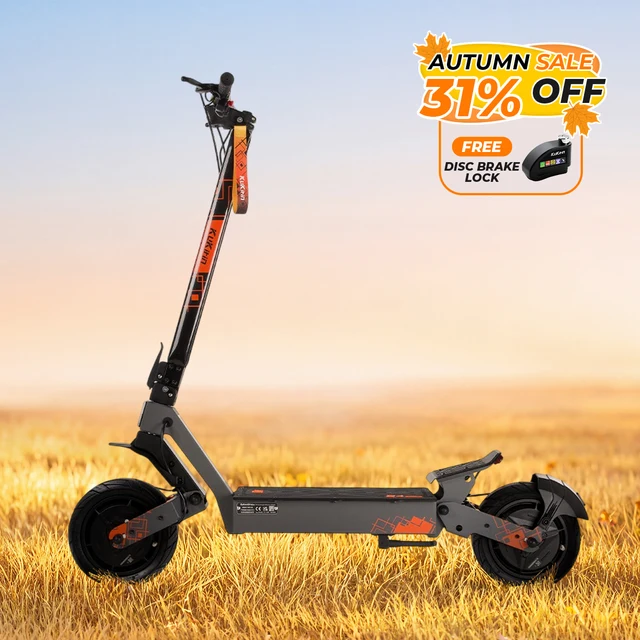
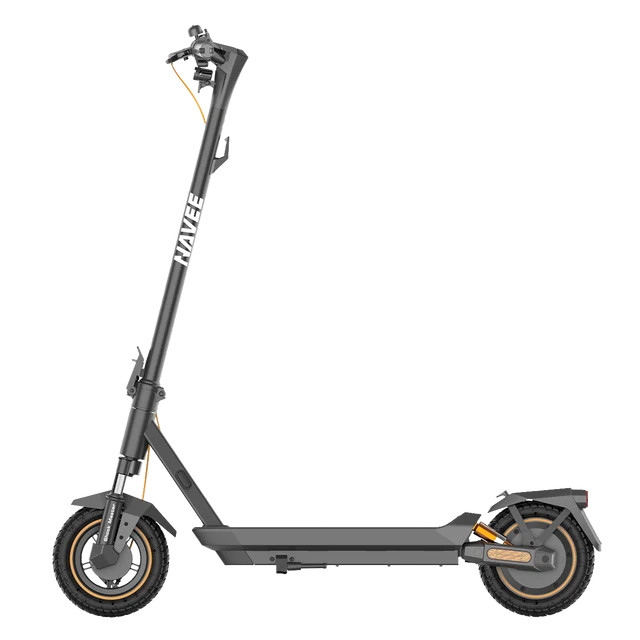
The catalog we track runs from 8-inch entry wheels to a 12-inch Megawheels R1, and the wheel's diameter decides what a pothole does before the tire type does: an 8-inch wheel drops into a crack that a 10-inch rolls over. Ten-inch pneumatics are the sweet spot for city riders - standard on models like the NAVEE GT3 Max - while 11-inch wheels on the KuKirin G4 Ultra push the same idea further. Under 8.5 inches, ride assuming every crack is a hazard.
Big-wheel pneumatic picks from the catalog
The 60-second decision
Smooth asphalt, short ride, zero garage space: solid, and enjoy never thinking about it. Any potholes, any distance over a couple of miles, any rain in your forecast: pneumatic, 10 inches or more, and put a gauge in the drawer. Riders in the second group should treat a flat - not a dead battery - as the event their plan B covers.
Want the tire question in context of everything else? The buying guide runs the full checklist, and the monthly maintenance routine keeps whichever tire you pick honest.
FAQ
How long do electric scooter tires last?
Pneumatic tires typically cover 1,000-3,000 miles depending on rider weight and surface; solid tires wear slower but degrade with age cracks. Check both monthly - pressure for pneumatic, tread and cracks for solid.
Can I swap solid tires for pneumatic on my scooter?
Only if the rim and fork clearances support the air tire of the same size - many solid-tire frames are built around them. Check the model page and official spec sheet before buying parts; the swap is not universal.
What tire pressure should I run?
The number printed on the tire sidewall - most street scooter tires take 40-50 PSI. Higher rolls faster on smooth pavement, lower grips better on rough streets; never ride visibly soft, that is what causes pinch flats.
Can you fix a punctured scooter tire?
Pneumatic: yes - inner tube patches start around $10 and a tube swap is a 30-minute job on most models. Solid tires cannot be patched; a worn or damaged solid tire means a pressed-on replacement, usually a shop job.